
A Message from the President
 Welcome to the first issue of De Vine, Psychedelics in Recovery’s newsletter. I’m grateful you’re here.
How do we talk honestly about recovery?
PIR® was born from a simple but difficult question: How do we talk honestly about recovery in a world where psychedelics are increasingly visible, medicalized, politicized, and misunderstood— without losing our integrity or one another? Over the years, our fellowship has grown into a diverse, sometimes imperfect, and deeply committed community wrestling with that question
together.
This newsletter is an extension of that effort. de Vine is not a platform for promotion, persuasion, or dogma. It is a space for reflection, accountability, service, and shared learning. You’ll find reports from service bodies, creative work emerging from the fellowship, and thoughtful engagement with recovery, integration, and the responsibilities that come with both.
Our task is not to eliminate disagreement
Growth brings complexity. As PIR® expands across geographies, modalities, and viewpoints, we are continually challenged to balance openness with safety, innovation with humility, and individual experience with collective care. These tensions are not signs of failure; they are signs that something alive is being tended. Our task is not to eliminate disagreement, but to remain grounded in respect, transparency, and a shared commitment to recovery.
Whether you are new to PIR® or have been walking with us for years, I invite you to see this publication as a conversation rather than a conclusion. Read closely. Question thoughtfully. Serve where you are able. And remember that none of us carries this work alone.
Thank you to the PR Committee and all contributors who brought this first issue into being. I look forward to what we will continue to grow—together.
In service,
-Kevin Franciotti
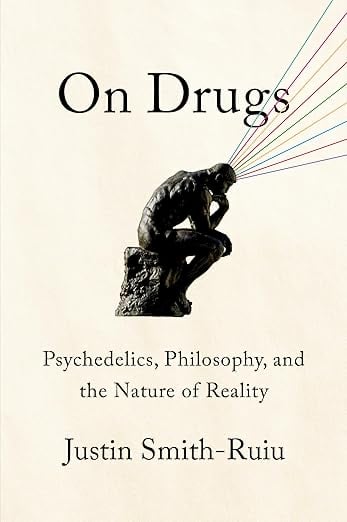
“Finding a Way Home,” A review of Justin Smith-Ruiu’s On Drugs: Psycedelics, Philosophy, and the Nature of Reality, by David M
“Is it me, the drugs, or God?”
This seems a relatively common question in psychedelic communities, especially, it seems, in psychedelic recovery communities. Do psychedelics inspire connection with spirit (God), connect us more deeply to ourselves (entheogenic awakening), or just offer a transient high?
This seems a relatively common question in psychedelic communities, especially, it seems, in psychedelic recovery communities. Do psychedelics inspire connection with spirit (God), connect us more deeply to ourselves (entheogenic awakening), or just offer a transient high?
This seems a relatively common question in psychedelic communities, especially, it seems, in psychedelic recovery communities. Do psychedelics inspire connection with spirit (God), connect us more deeply to ourselves (entheogenic awakening), or just offer a transient high?
This seems a relatively common question in psychedelic communities, especially, it seems, in psychedelic recovery communities. Do psychedelics inspire connection with spirit (God), connect us more deeply to ourselves (entheogenic awakening), or just offer a transient high?
This seems a relatively common question in psychedelic communities, especially, it seems, in psychedelic recovery communities. Do psychedelics inspire connection with spirit (God), connect us more deeply to ourselves (entheogenic awakening), or just offer a transient high?
On Drugs certainly made me think, and then it made me not-think. I appreciated both imperatives.
On Psychedelic Augmentation of 12-Step Engagment
In November 2025, a peer-reviewed article was published in the Journal of Psychoactive Drugs examining a phenomenon that many in our community have been living for years: the intentional integration of psychedelic experiences with 12-Step recovery. Titled “Psychedelic Augmentation of 12-Step Engagement: A Novel, Accessible Approach to Enhance Community-Based Recovery from Substance Use Disorders,” the study represents one of the first empirical efforts to document this emerging practice in real-world settings.
Importantly, this research did not emerge in a vacuum. Participants were intentionally recruited through a community partner with lived experience—members connected to Psychedelics in Recovery™ and adjacent 12-Step networks—underscoring a central truth: much of the innovation in recovery is happening outside of clinics, ahead of formal systems, and in response to unmet needs.
Why This Study Matters
The study was small by design. Due to federal research constraints, the final sample included eight individuals in remission from alcohol, opioid, and/or stimulant use disorders. The authors are explicit that the findings are exploratory and not generalizable. But what the study lacks in scale, it makes up for in depth.
Participants described using psychedelics such as psilocybin, ayahuasca, ibogaine, peyote, and others in conjunction with—not instead of—12-Step engagement. All had prior exposure to 12-Step programs. For some, psychedelics helped them finally engage with the Steps after repeated failed attempts. For others, they addressed persistent psychological distress that lingered despite long-term abstinence and diligent program participation.
This distinction matters. The study does not frame psychedelics as a shortcut or replacement for recovery work. Rather, participants consistently emphasized that psychedelics were most helpful when embedded within an existing framework of accountability, integration, and ongoing peer support.
Psychedelics as a Catalyst, Not the Container
One of the most compelling findings was how participants described the synergy between psychedelic experiences and specific 12-Step practices. Psychedelics appeared to facilitate openness to Step 2 (belief in a Higher Power), deepen moral inventory work in Step 4, and enrich contemplative practices aligned with Step 11. Several participants used vivid metaphors: psychedelics as the “engine,” the Steps as the “transmission.”
Equally important, participants were clear about what didn’t work. Prior recreational psychedelic use—absent structure, intention, or integration—was largely described as ineffective for recovery. Frequent or poorly integrated use was seen as destabilizing and, in some cases, as reinforcing addictive patterns. In other words, “set and setting” extended beyond the ceremony itself to include one’s recovery community, living situation, and psychological readiness.
Accessibility and Equity
A central theme in the paper is accessibility. Half of the participants were uninsured. Many contrasted the relative affordability of community-based approaches with the high cost of emerging psychedelic-assisted therapies. Twelve-Step programs, for all their imperfections, remain free, ubiquitous, and lifelong. For participants in this study, that infrastructure provided something clinical models often cannot: continuity.
This is a crucial equity consideration. As psychedelic medicine becomes increasingly medicalized and commercialized, community-based models—however imperfect—may remain the only viable option for many people. The study does not argue that this is ideal. It argues that it is real.
Risks, Tensions, and Honesty
The authors do not minimize risk. Participants reported challenging psychological experiences, one case of transient psychosis following unsupervised high-dose use, and instances of psychedelic misuse—particularly with non-classic substances like MDMA. Tensions with abstinence-oriented norms were also acknowledged. Most participants avoided discussing psychedelic use in traditional 12-Step meetings, relying instead on alternative spaces such as PIR® for honest dialogue.
This mirrors long-standing dynamics around medications for opioid use disorder and highlights a broader truth: recovery is relational. Stigma, secrecy, and fear of exclusion can themselves become risk factors.
Where PIR® Fits In
Psychedelics in Recovery™ did not set out to prove a model. PIR® emerged to meet people where they already were—navigating recovery, curiosity, skepticism, hope, and risk in equal measure. This study validates that community-based wisdom deserves careful attention, not dismissal or romanticization.
The findings do not offer simple answers. They offer something more valuable: grounded questions for future research, policy, and community practice. How can integration be supported? Who is most at risk? What safeguards matter most outside clinical settings? And how do we honor both recovery principles and evolving therapeutic landscapes?
As the authors conclude, further research is urgently needed. PIR® is proud to have contributed—carefully, ethically, and transparently—to that ongoing conversation.
Letter from the Editor
I’m honored to present the first edition of De Vine, Psychedelics in Recovery’s monthly newsletter. When I joined PIR® in Fall 2025, I volunteered to launch this newsletter despite knowing I’m a habitual procrastinator.
If you’re reading this, I’ve chosen to overcome procrastination for this project because the opportunity to include my voice in the community of PIR at this foundational time is too unique to pass up.
I have found myself in PIR because my experiences of addiction and recovery no longer align with the traditional 12-step narrative. I learned quickly when I started attending 12-step meetings that I had to identify with the core tenants of the fellowship if I wanted to be included in the community, much less recover. I chose to interpret my substance abuse through their lens and act with their methods as long as this alleviated my addiction and loneliness.
It remained that I had sacrificed essential truths about myself to be a part of the traditional recovery community. I was stuck in a dangerous conundrum—if I could not be honest within my community, I could not recover with them. Yet alone, I lacked the power to recover at all.
Being true to myself today is taking on the challenging task of defining my own recovery. Thankfully, I have found a community of people, who like myself, have dared to start on this journey. No one knows how challenging it is to go outside of the trodden path until they have done so—and here, we find ourselves, as a group, somehow making room for each other on the road less traveled.
This publication celebrates the freedom and safety of our members to define their own recovery. De Vine seeks to catalogue and honor the debates, projects, and goals of our service committees. In addition, we present a variety of member experiences, book reviews, and research publications from a multitude of recovery modalities.
There is a stark similarity between democratic communities that allow debate and the dialogic process that individuals undergo when recovering. Recovery itself is a challenging of thoughts, beliefs, and ideals that are no longer working. We need each other—and we need disagreement just as much as we need agreement—for our recovery process to adapt to the inevitable changes any community will face.
Thank you for joining me here—I hope you’ll join the conversation.
Katherine E
We Want To Hear From You!
Contribute to De Vine
Psychedelics in Recovery is launching a monthly newsletter in 2026 to highlight the many ways we are redefining recovery. We invite you to share your story with us—between 500 and 1,000 words—whether it includes the 12 steps, psychedelics, other fellowships, or tools beyond traditional approaches. As a member of PIR®, your experience, strength, and hope can inspire others and help us grow together as a community. Join us in shaping this conversation and showing the diverse paths that recovery can take.
Text or WhatsApp me at 615-812-7860 for specific guidelines for contributions
Newsletter Contribution Guidelines
- Topics
Your article can explore any of these Psychedelics in Recovery (PIR®) themes:
- Insights from current PIR® literature
- Tools from 12-step programs (e.g., ACA, SLAA, NA, AA)
- Reflections on outside literature related to psychedelic healing, spirituality, or addiction recovery
- Personal experiences with PIR® tools such as IFS, breathwork, or other practices
- Practical approaches to psychedelic use (e.g., set and setting, safety, facilitation, harm reduction)
- Writing Guidelines
- Length: 500–1,000 words
- Write in the first person to maintain anonymity
- Respect PIR® traditions:
- No dosing instructions
- No specific medicine recommendations
- Sharing your own integration experiences is welcome—just describe your journey without giving advice
- Submissions
Please send your article to pr@psychedelicsinrecovery.com. This is a safe and supportive space to share your voice.
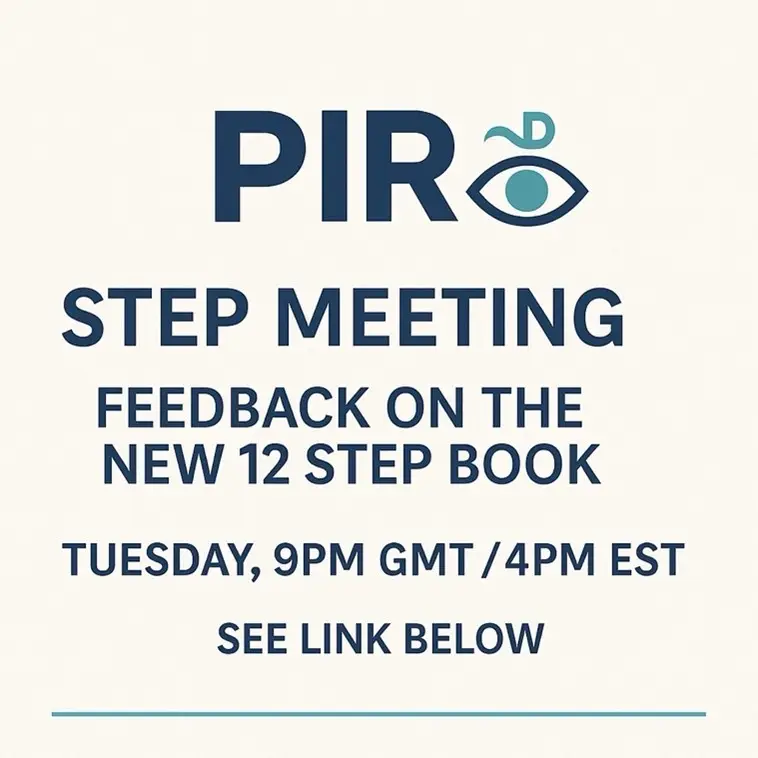
12 Step Book
The 12-Step Subcommittee is writing the book of Psychedlic in Recovery’s 12 Steps. Steps one through ten have been written and reviewed as of the end of 2025. We project that we will have completed writing and editing the 12-steps some time in February or March, at which point we will be ready to begin layout for public publication.
Step One. We admitted we were powerless over our patterns — that our lives had become unmanageable.
A Human Problem, by Douglas N
Before the drink, before the scroll, before the affair, before the apology you half-meant and the promise you couldn’t keep—there may lie a quieter ache.
I don’t feel whole.
I don’t feel enough.
I don’t feel safe in my own skin.
I don’t feel okay.
And when “not okay” becomes home, we’re liable to go to great lengths to change that.
The Fix
So we learn strategies. Some are chemical. Some are relational. Some are spiritual-looking. Some are impressively productive.
- Addiction says: Change my state.
- Control says: Change your state so I can breathe.
- Fawning says: Let me become what you want before you decide I’m not wanted.
- Perfection says: Let me earn my right to exist.
- Withdrawal says: Let me disappear until it’s safe to be seen.
These aren’t born from malice. They’re born from urgency. They’re homemade medicine. They work fast. They work short. They work—until they don’t.
The Quiet Erosion
Then comes the part no one plans for: We cross lines we once swore were uncrossable.
Not with fireworks. With footnotes. Just this once. Just tonight. Just until the anxiety passes. Just until they calm down. Just until I get through this week.
And then we move the line to make room for the crossing.
That’s when integrity starts to hurt. Not because we broke a rule—but because we broke contact with the person we wanted to be. Integrity isn’t moral superiority. It’s internal coherence. It’s being in one piece.
And this is the tragedy: the very thing we do to feel okay is what makes us feel less okay.
The Story We Tell
To keep going, we need a narrator. Rationalization steps in like a publicist: It wasn’t that bad. You deserved it. You had no choice. No one understands. This time is different. You can stop whenever you want.
Rationalization doesn’t sound like a lie. It sounds like relief. It’s the voice that keeps the system running when the system is breaking us.
Stop Negotiating
Step One is not a scolding. It’s not a courtroom. It’s not a badge of shame.
It’s an opening. It’s the moment we decide to stop negotiating with reality. Powerlessness doesn’t mean helplessness. It means: this approach cannot deliver what it promises.
Acceptance doesn’t mean approval. It means: this is what is happening.
Asking for help doesn’t mean weakness. It means: I’m done pretending I can do this alone.
Step One is not “I am broken.” It’s: “My strategy for wholeness is breaking me.”
Unmanageability
Unmanageability isn’t always chaos on the outside. Sometimes it’s a polished life with a private war inside it.
It’s the constant math: How much can I do before it costs me?
It’s the hidden bargaining, the countdown clocks, the secret rules, the exhausting maintenance of a self that can’t rest.
It’s the way the world gets smaller as you try harder to keep it under control.
Practice
Step One is a daily honesty, not a one-time admission. It can sound like:
- I can see the pattern. I can feel the pull.
- I can name what I keep rationalizing.
- I can pause before the old remedy becomes the old consequence.
- I can reach out before I disappear.
- I can tell the truth without turning it into a verdict.
The First Question
Not What’s wrong with me? But, What do I find myself regularly rationalizing? What do I keep calling normal that I wouldn’t want in my life if I were truly free?
And underneath that: What am I trying to get—relief, love, safety, belonging—that I don’t believe I can get any other way?
The Promise
Step One does not make you small. It makes you real. And reality—as brutal as it can be—is the only ground that can hold transformation.
This is the beginning of becoming whole: not by forcing yourself into perfection, but by ending the argument with what is.
Prayer
Great Mystery,
Help me admit what isn’t working without turning it into shame.
Show me where I rationalize, and give me the courage to stop calling it freedom.
Public Relations
PIR® launches Newsletter and Podcast and expands Social Media Presence
In the last three months, the PR Committee has been very active, focusing its efforts on two key projects: the Newsletter and the Podcast.
Newsletter
The Newsletter, edited by Katherine, has now launched and is the publication you are currently reading. It is designed to keep the fellowship informed, connected, and inspired, while sharing updates from across PIR® and the wider recovery and psychedelic integration community.
Podcast
In parallel, the committee has been developing a new podcast, PIR® Integration Radio, hosted by Anne, which is due to launch later this month. The podcast will begin with a series of interviews with PIR® members titled Journeys of Healing, offering personal stories of recovery and integration. Episodes will be available to download via the PIR® website as well as on most major podcast platforms.
Social Media Presence
Alongside these projects, the PR Committee has begun building PIR’s social media presence. Accounts have now been created across all major platforms, and we are seeking volunteers to help manage and grow these channels.
If you are interested in supporting PIR’s outreach and communications work, please get in touch with the PR Committee at pr@psychedelicsinrecovery.org
Literature Committee
The Literature Committee (LitCom) serves as a steward of Psychedelics in Recovery’s written voice, ensuring that all published materials reflect PIR’s Steps, Traditions, Guiding Principles, and commitment to safety, inclusivity, and spiritual integrity.
Working in collaboration with the Public Relations and Tech Committees, LitCom reviews, edits, and finalizes written content—including newsletter articles, blog posts, scripts, and educational materials—so that language is clear, accessible, trauma-sensitive, and aligned with PIR’s primary purpose: to pursue recovery and help others do the same.
LitCom’s role is not to govern or endorse outside opinions, but to help preserve coherence, humility, and consistency across PIR literature, honoring both lived experience and group conscience. Through careful attention to tone, clarity, and alignment, LitCom helps ensure that PIR’s message of recovery is carried responsibly, respectfully, and in accordance with our shared principles.
General Service
Incorporating the 12 Traditions in PIR
A substantial portion of recent GSR meetings centered on Tradition-based discussions, with particular attention to Tradition 11, anonymity, and appropriate public representation of PIR. GSRs shared experiences from their meetings that reflected varying interpretations and concerns around privacy, safety, and language used in both in-meeting and public-facing contexts. These discussions highlighted the need for clearer guidance and consistency, especially as PIR continues to grow and attract new members.
Building Communication Between Subcomittees and Groups
The GSR Subcommittee also spent time addressing broader themes of trust, tone, inclusivity, and communication between service bodies and the fellowship.
Recent meetings saw a noticeable increase in attendance, signaling heightened engagement and a strong desire from the groups to be heard and better informed. While this has led to richer dialogue, it has also reinforced the importance of respectful facilitation and maintaining a safe and constructive service environment.
Action Points for 2026
To improve transparency and information flow, the GSR Subcommittee voted to formally bring subcommittee reports back to the GSR body on a regular basis. This decision was made to ensure that GSRs receive timely updates from all service areas and are better equipped to bring accurate information and context back to their respective groups, supporting informed group conscience.
Book Committee
We are a project organized for the purpose of fulfilling the mission of editing and publishing PIR’s first book. We changed from the “committee” model to a “project” model such that we have been for the past 2+ years of production a working group open only to volunteers willing to dedicate significant time to editing, writing, and producing the book Psychedelics in Recovery: Medicines, Sacraments and Catalysts. We distributed the editor’s edition of the book in .pdf format October 2025. Due to complications in the publication process, we have been delayed in releasing the book in accessible formats to fellowship it was written for. As we are now in the final stages of editing the book, the Book Committee is no longer seeking volunteers.
Email: forapirbook@gmail.com
About us
The Book Committee was founded by Clifton Ross at the November 2022 Psychedelics in Recovery Intergroup meeting as a project to benefit the fellowship. Initially we organized forums to gather testimony for the book and coordinated a group of volunteers. The initial enthusiasm for the project disappeared when the hard work of putting a book together began. We reorganized as a working group with Cheryl Stevens as co-editor on the book and Kolya as project manager. Other PIR members have volunteered time to copy edit and provide feedback on material. The book is in the final stages of production.
Mission Statement
Our Purpose & Mission
The Book Committee’s objective remains the writing, editing, production and publication of the book, “Psychedelics in Recovery: Medicines, Sacraments and Catalysts.”